How Do Free Walking Tours Work In Mexico City?
How pay-what-you-want walking tours actually work in Mexico City: what the free price covers, what you pay for separately, when walks run and where they meet.
In Short
Free walking tours in Mexico City are pay-what-you-want walks run by independent local guides, booked through platforms such as GuruWalk. You reserve a place online, arrive at a stated meeting point, walk for roughly two hours, and pay the guide whatever you choose at the end. Food, museum entry and cable-car rides are never included in the guiding price, and some walks run in Spanish only.
This question sits inside the free walking tours overview guide.
The pay-what-you-want model confuses people the first time they meet it, and fairly so. A two-hour guided walk that costs nothing up front sounds like it must hide a catch: a forced shop stop, a hidden booking fee, a guide who pressures the group at the end. In Mexico City the model is simpler and more transparent than that, and this site's directory of 24 walks exists because it works. Every walk listed here is a real, live listing run by an independent local guide on GuruWalk or, for a handful, on freetour.com, and this site neither operates nor is affiliated with either platform.
How Do Free Walking Tours Work In Mexico City?
A free walking tour is a guided walk with no fixed price: you book through a platform such as GuruWalk, meet the guide at a published meeting point, walk the route with a group, and tip the guide at the end whatever you choose. The tip is the guide's payment; the platform charges a small booking fee online to hold your place. Every one of the 24 walks on this site works this way.
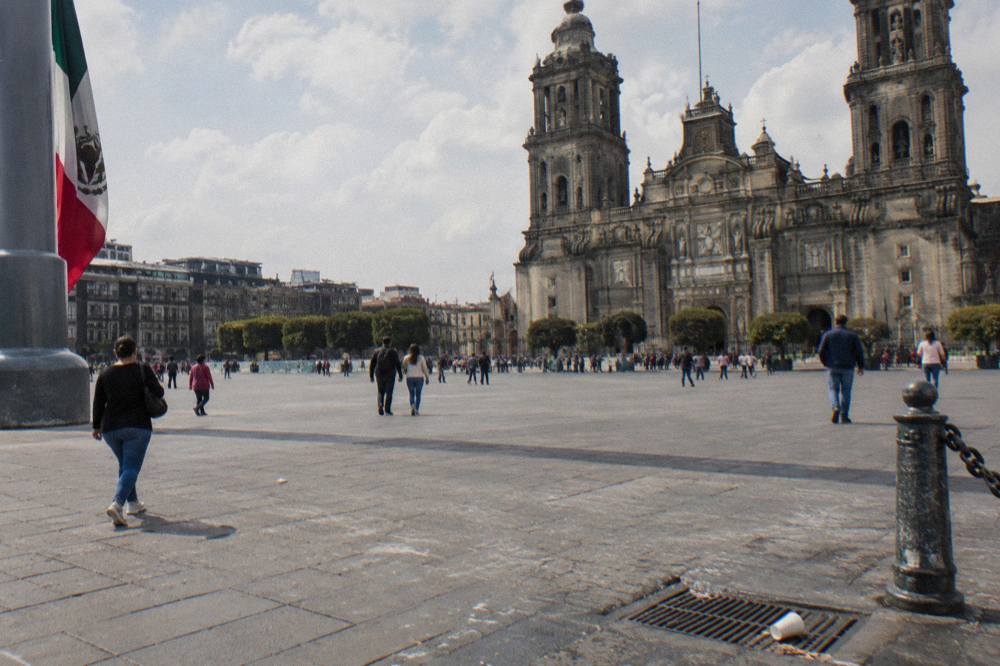
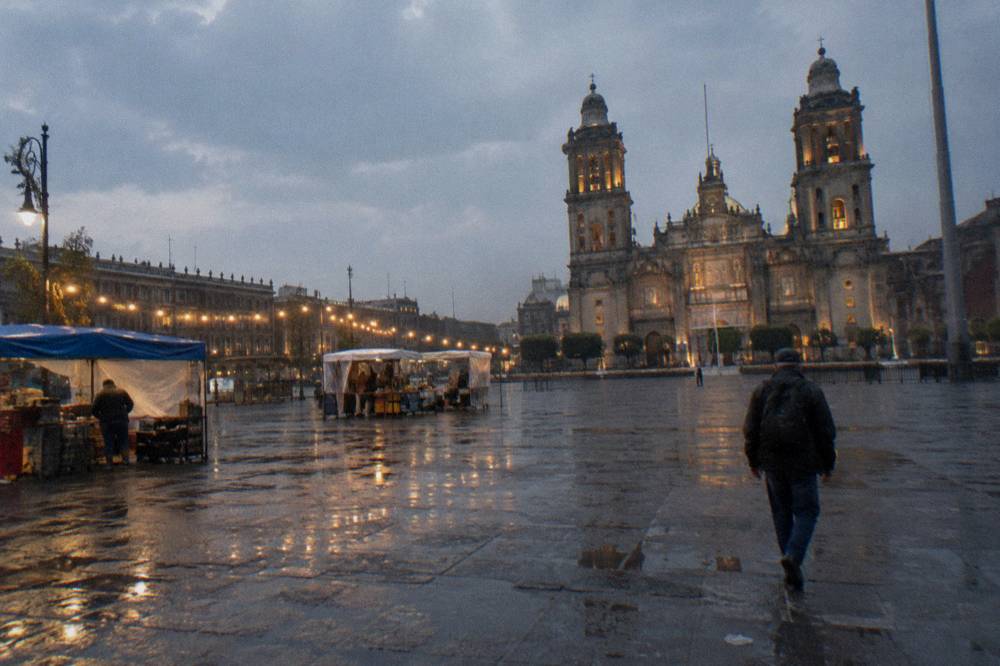
The mechanics start before you leave your hotel. You pick a walk, choose a date and a time slot, and reserve through the platform the guide uses. The reservation is free in the sense that no guiding fee exists, though the platform itself applies a small per-person booking fee at checkout on GuruWalk; that fee is to hold your place, not to pay the guide. You receive a meeting point and a start time. Showing up is then entirely your responsibility: these are not hotel pickups, and a guide with a group already moving will not wait long past the start time. Two-and-a-Half-Hour Introduction is a pay-what-you-want walk that starts at Plaza de la Constitución, Zócalo.
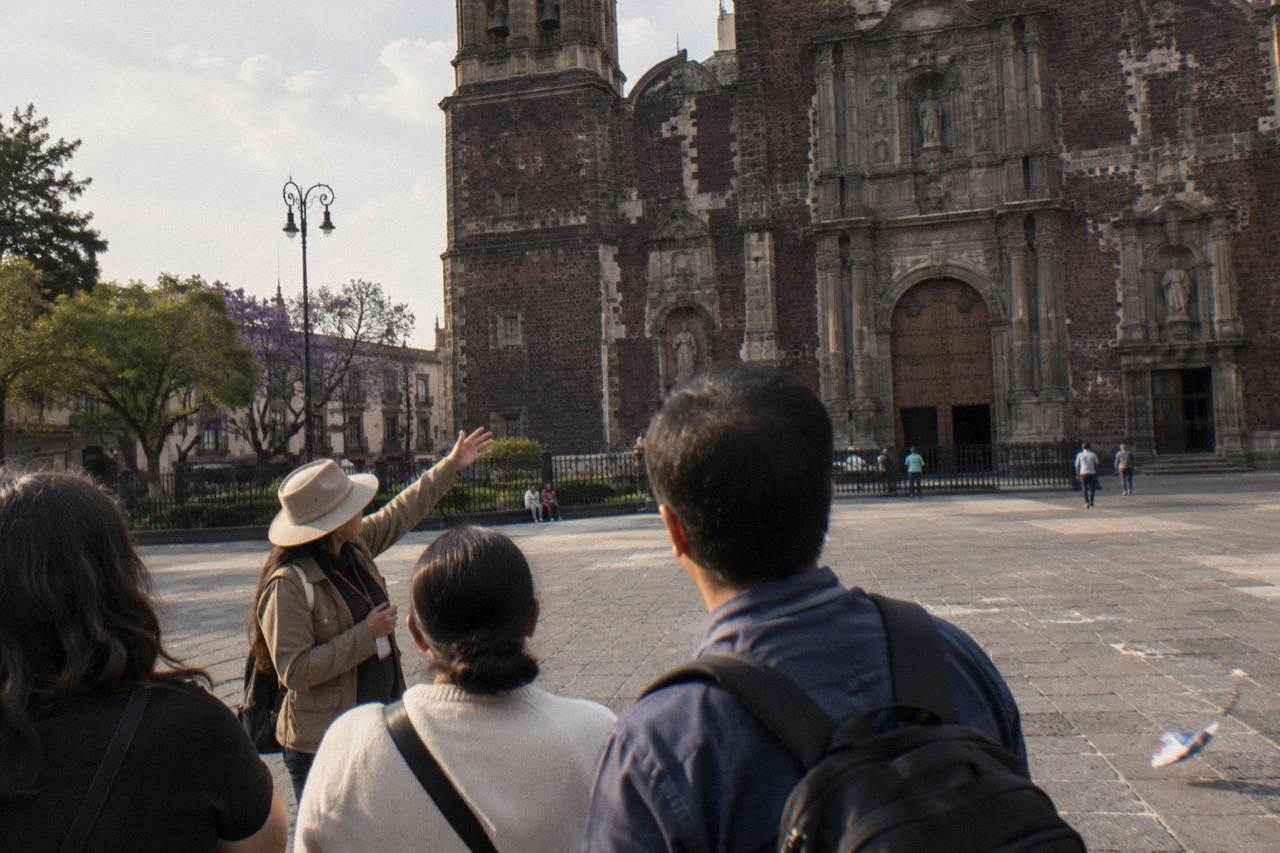
At the meeting point the guide gathers the group, usually holds up a sign or an umbrella, gives a short introduction, and sets off. Group sizes vary with demand and with each guide's own cap; nothing in the data behind this site states a fixed size, so treat any number you read elsewhere with caution. The walk itself covers the neighbourhood the listing names, told by a guide who lives in the city and, in most cases here, runs the walk as their own small business rather than as an employee of a tour company.
The payment moment comes at the end. The guide thanks the group, says something explicit about the pay-what-you-want model, and people hand over cash or, on some walks, use a card reader. The platform never sets the amount and never takes a cut of the tip. That is the whole transaction. There is no upsell mid-walk, no obligation to buy anything, and no minimum, which is why the model has spread to virtually every major walking-tour city in the world and why Mexico City has such a deep bench of them.
This site's featured walk for this question is the Two-and-a-Half-Hour Introduction by Kactus, 2 hours 30 minutes, rated 4.82 out of 5 across 4,138 GuruWalk reviews, meeting at Plaza de la Constitución, Zócalo. It is the busiest walk in the directory and the clearest example of the model: a general first-visit walk of the Centro Histórico, in English or Spanish, paid entirely at the end. Read more in how free walking tours compare or go straight to the guide's GuruWalk page to reserve.
Here are walks in the same pay-what-you-want model that suit different first itineraries:
The platform choice matters more than most visitors realise. GuruWalk lists most of the walks on this site; freetour.com hosts the Chapultepec Castle and Lake walk, the Downtown Secrets Walk and the Santa María la Ribera Alternative, and nothing else in the directory. Both platforms work the same way from your side of the screen, but their rating scales differ: GuruWalk scores out of 5, freetour.com out of 10, and the two are never comparable at a glance. A 9.8 on freetour.com is excellent; so is a 4.8 on GuruWalk.
What Does The Free Part Include?
The free part includes the guide's time, their commentary, and the walk itself: roughly two hours of guiding in a group, in the language the listing states, ending wherever the route ends. It does not include food, drinks, museum tickets, transport fares or any attraction entry. Where a listing carries an additional-costs note, guiding stays pay what you want while everything consumed or entered along the way is bought separately.
Being precise about the boundary saves disappointment. The guiding service is the product, and the guiding service is what the tip pays for. A guide will stop in front of the Palacio de Bellas Artes and explain it; entering it afterward is a separate transaction at the box office, MXN 95, free on Sundays for everyone, ticket at the box office only. The same logic applies to the Castillo de Chapultepec: the forest is free to enter, the castle costs MXN 210 and closes Mondays. A walk that discusses a building from the street has still delivered the free part in full.
Some listings on this site carry an additional-costs flag because the walk's subject is itself something you buy. The street-food and taco walks are the clearest cases: on Street Tacos, Safety Focus by Kactus, 4.65 out of 5 across 723 GuruWalk reviews, guiding is pay what you want while the tacos you eat are paid to the vendors. On Street Food, Mezcal Tasting Included by Ian Kaare, 4.96 out of 5 across 121 GuruWalk reviews, the mezcal and market food are likewise bought separately. The Cable Car and Urban Art walk by Kactus includes a cable-car leg whose fare is not part of the tip. The Spanish-only Anthropology and Coyoacán walks pass museums whose entry is bought at the door.
None of this makes those walks a worse deal. A food walk where you pay for your own tacos still delivers a guide who knows which stalls to trust, and the tip you choose reflects only the guiding. The honest way to read every listing is: guiding is free-form payment, everything else is at face value. This site never puts a money figure against a walk, because there isn't one to put.
What Do You Still Have To Pay For?
You pay for food and drink on the food walks, museum and castle entry where a walk enters one, cable-car fares on the urban-art walk, and the tip itself, which is the only payment the guide receives. Platform booking fees, where the platform charges one, are paid online at reservation. No walk on this site bundles any of these into the guiding price.
A practical split helps. Things paid online before the walk: the small platform booking fee. Things paid during the walk at face value: tacos, mezcal, market snacks, cable-car fares, museum tickets on walks that enter museums. Things paid at the end in cash: the tip. That is the complete list, and any "free tour" in the city that asks for money up front for the guiding itself is not the model described here.
| Cost type | Paid to | When | Applies to |
|---|---|---|---|
| Booking fee | The platform, online | At reservation | Most GuruWalk bookings |
| Tip for guiding | The guide | End of the walk | Every walk |
| Food and drink | Vendors on the route | As you eat | The taco and street-food walks |
| Museum entry | Museum ticket office | At the door | Walks that enter museums |
| Cable-car fare | The transit system | At boarding | Cable Car and Urban Art |
The tip question deserves its own honesty. Nothing in the model obliges any amount, and guides will say so plainly. In practice the tip is the guide's entire income from the walk, and visitors who enjoyed two hours of guiding commonly tip in a range that reflects what a paid tour of similar length would cost in the city. This site's companion piece on how much to tip a free walking tour goes through the reasoning without inventing a number here.
One trap worth naming: Spanish-only walks. The Spanish-Only Coyoacán and Frida walk by Kactus and the Anthropology Museum walk guided by Alondra Lizette run in Spanish, and the platform states this on GuruWalk. Booking a walk in a language you do not speak is not a defect in the model, it is a misread listing, and it is the most avoidable disappointment in the whole system. Every walk page on this site states its languages for exactly that reason.
When Is The Free Option Available?
Free walking tours run on published schedules set by each guide: most walks on this site run in regular morning and afternoon slots, bookable through the guide's listing on the platform they use, with availability shown at reservation. There is no season when the model closes, and there is no city-wide timetable, because each of the 24 walks here is an independent listing with its own calendar.
Because availability lives on each listing, the practical answer is to treat the platform calendar as the source of truth. The Two-and-a-Half-Hour Introduction offers regular slots in English and Spanish; the historian-led Historic Center walk runs in German, English and Spanish; the Ninety-Minute Tenochtitlan tour by Martelbi, with 5 out of 5 across 10 GuruWalk reviews, runs in Spanish and Italian. Nothing on this site states a fixed weekly grid for any walk, and inventing one would mislead, so each walk page links straight to the live listing where the calendar sits. More of these guides are collected on Free Things To Do In Mexico City.
Timing interacts with the paid attractions in ways worth planning. Every INAH museum in the city, the Museo Nacional de Antropología, the Museo del Templo Mayor the Castillo de Chapultepec closes on Mondays, while Tlatelolco and Teotihuacan open daily, so a Monday Centro walk ends the day with fewer open doors. The INAH Sunday free-entry rule applies to Mexicans and foreign residents with ID only; tourists pay, MXN 210 at the castle and MXN 155 at Tlatelolco. That is the single most common planning mistake in the city and it is worth stating in full here rather than as a fragment later.
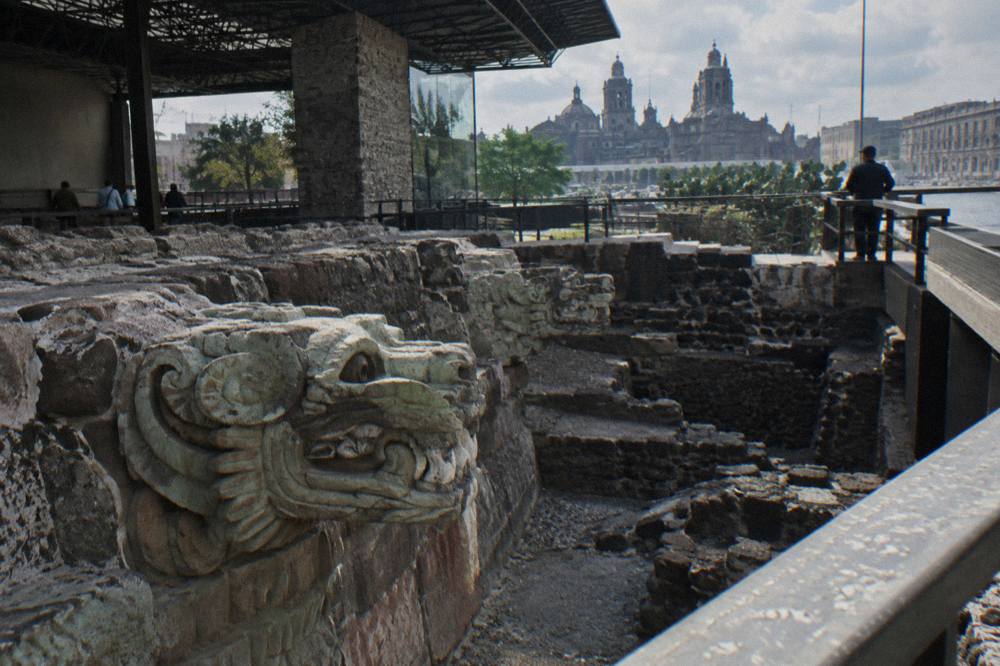
Booking windows matter too. The busiest walks fill their caps on peak days, and the platform shows remaining spots per slot. Reserving a day or two ahead costs nothing beyond the booking fee and secures the time you want; walking up to a meeting point unbooked risks a full group. Cancellation is free on these listings when you release the spot in the platform, which is part of why the model suits flexible itineraries better than pre-paid tours.
Where Does The Free Visit Start?
Every free walking tour on this site starts at the meeting point published on its own listing, and this site republishes exactly that: the Two-and-a-Half-Hour Introduction at Plaza de la Constitución, Zócalo; the Trendy Roma and Condesa walk at Avenida Cuauhtémoc 19, Roma Norte; the Chapultepec Castle and Lake walk at Paseo de la Reforma 132. There is no central departure point and no pickup service.
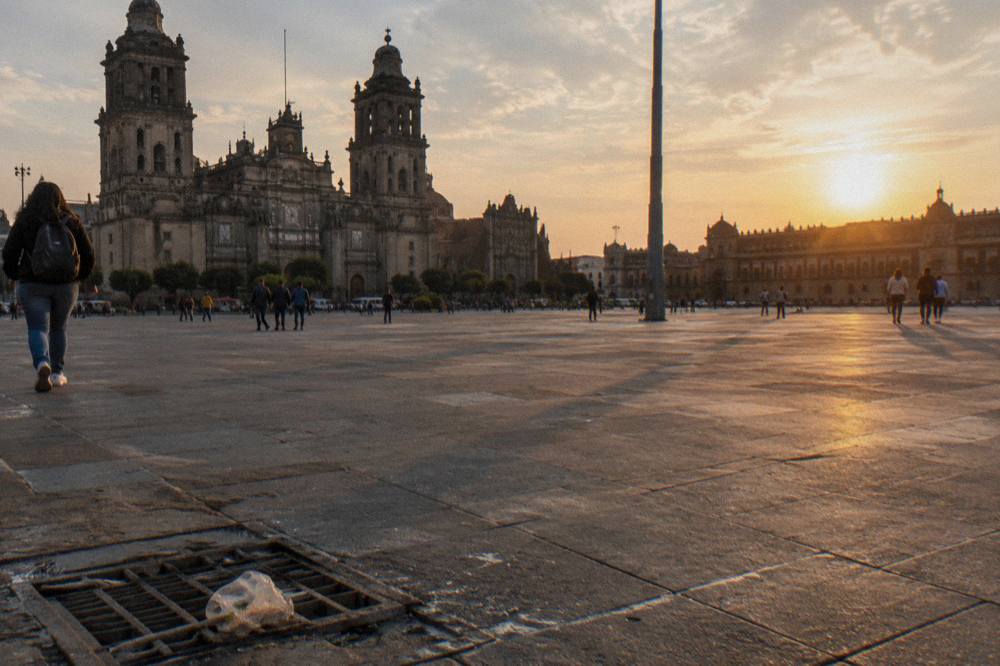
The meeting-point list is the most practical data on every walk page. In the Centro Histórico, walks gather at the Zócalo, at the Metropolitan Cathedral, at República de Guatemala 4, at Teatro Hidalgo on Avenida Hidalgo 23 and at Eje Central and Avenida Madero. In Coyoacán they gather at Eje 2 Poniente in Del Carmen, at Londres 247 and at Avenida Universidad 1525. In Roma Norte, at Plaza Villa de Madrid and Avenida Cuauhtémoc 19. Out at Mixcoac and Narvarte Poniente, at the addresses those listings give. The guide identifies the group with a sign or umbrella and starts on time.
Finding the point is your job, and the platform listing usually adds a map pin and a photo of the exact spot. Arriving ten minutes early is the standard advice and the only arrival advice this site will give, because no transport claim beyond the listing's own words appears in the data. If a listing says nothing about how to reach the point, treat the walk as starting exactly where stated and plan your own route there.
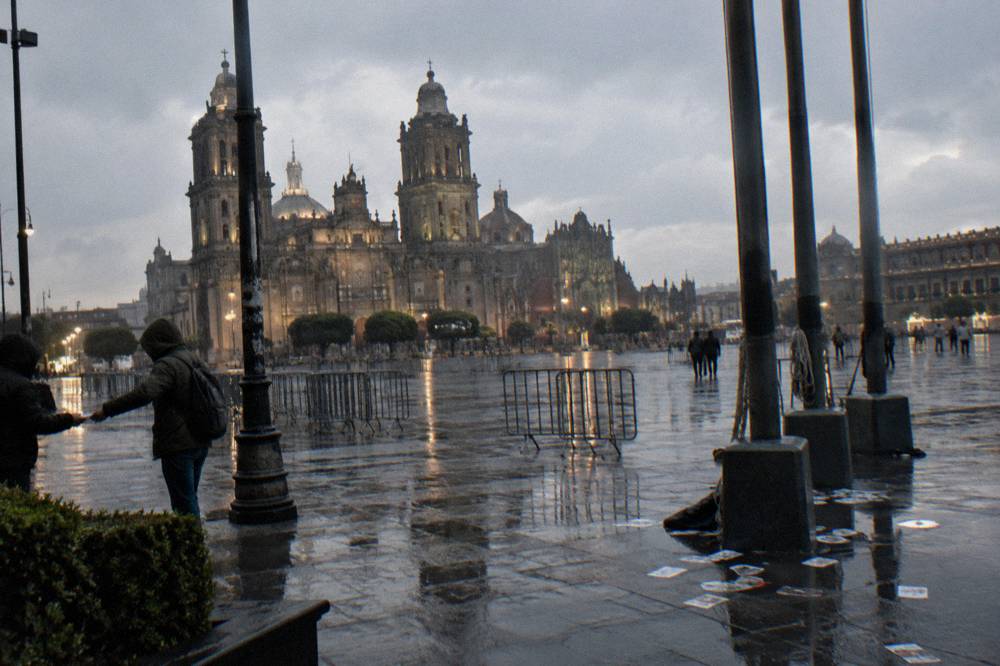
The Estación Historic Center Walk by Estación, 4.83 out of 5 across 2,838 GuruWalk reviews, meets at the Metropolitan Cathedral, Zócalo, and runs 2 hours in English or Spanish. It is the second-busiest Centro walk in the directory and a good example of how the meeting point defines the whole experience: walks can cover the same neighbourhood with different starting energies depending on where the group forms.
After that paragraph, one more practical note: walks that meet at the Zócalo and walks that meet at the Cathedral face each other across the square, so if you book both on the same day the transfer between them is a short walk across the plaza. No distance figure appears in the data, so none is invented here; the square is the square, and you can see one meeting point from the other.
Which Free Walking Tours Cover This?
The directory on this site carries 24 pay-what-you-want walks across six categories: Centro Histórico and Zócalo, Coyoacán and San Ángel, Roma, Condesa and Juárez, Chapultepec and Reforma, tacos, markets and street food, and hidden neighbourhoods and urban art. Some walks have large review pools on GuruWalk; others are smaller listings that still run but show fewer reviews.
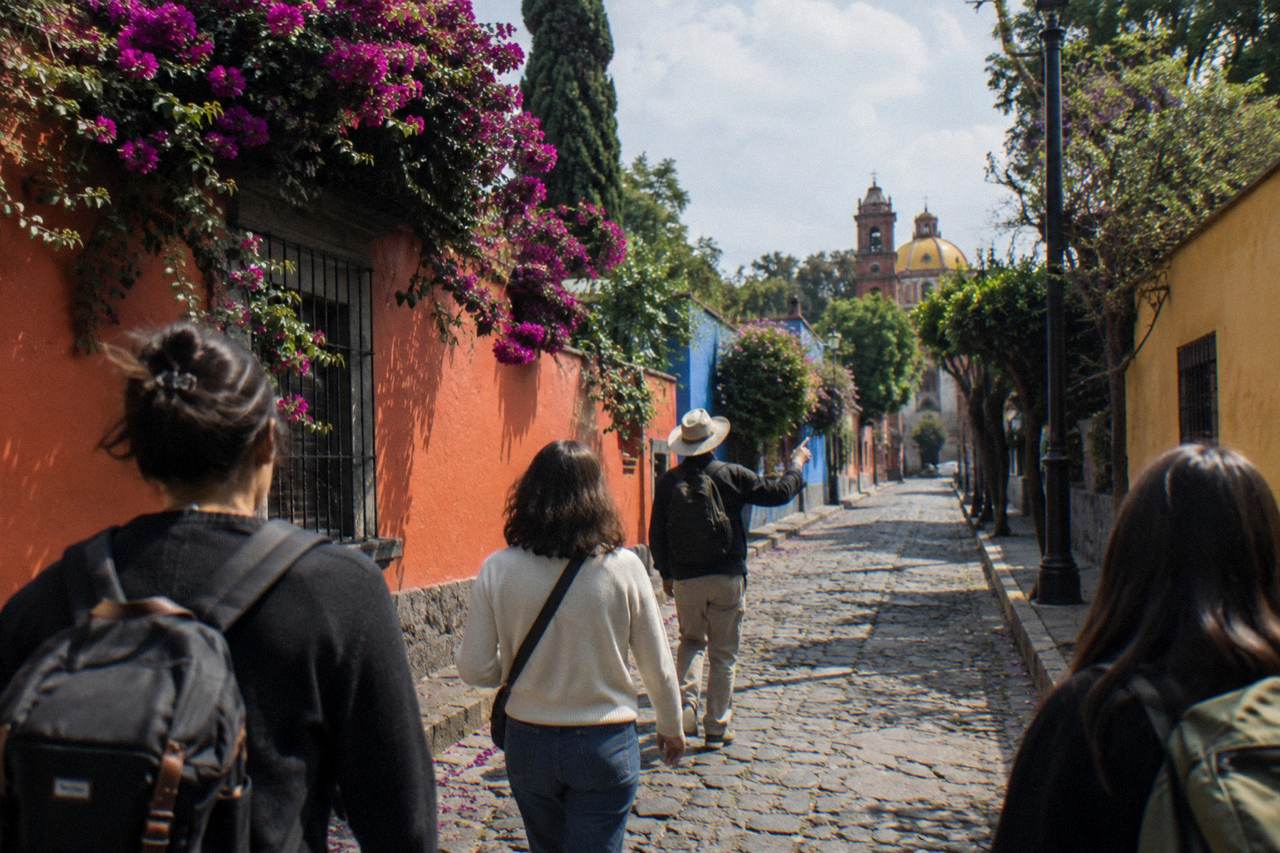
The depth sits in the Centro Histórico. Besides the Two-and-a-Half-Hour Introduction and the Estación walk already named, the Historic Center With a Historian by Free Tour Europe runs 2 hours 15 minutes in German, English and Spanish at 4.91 out of 5 across 1,360 GuruWalk reviews, and the History, Art and Cuisine Walk by Andares runs 2 hours in English at 4.86 out of 5 across 520 GuruWalk reviews. Other Centro options include the Downtown Secrets Walk, listed on freetour.com at 9.8 out of 10 across 205 freetour.com reviews, and the Ninety-Minute Tenochtitlan tour.
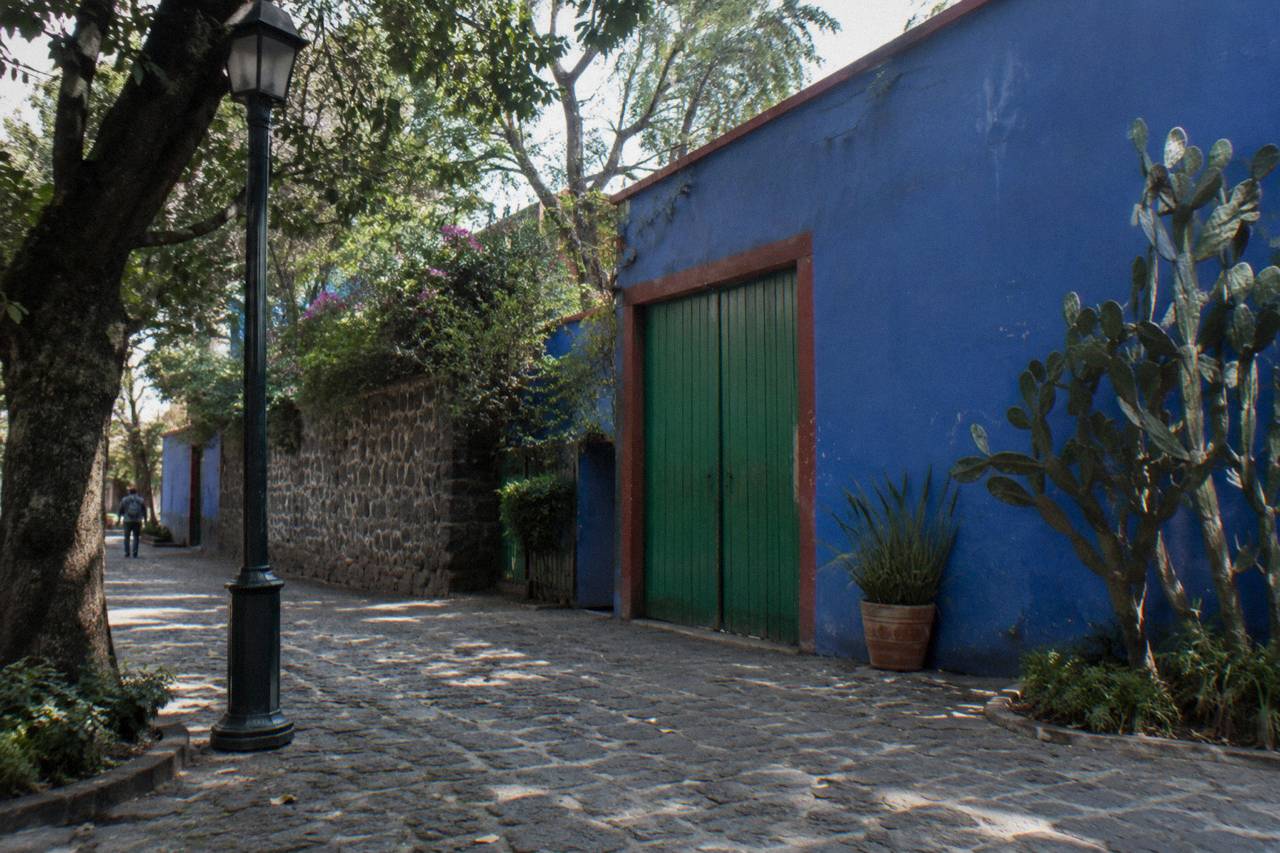
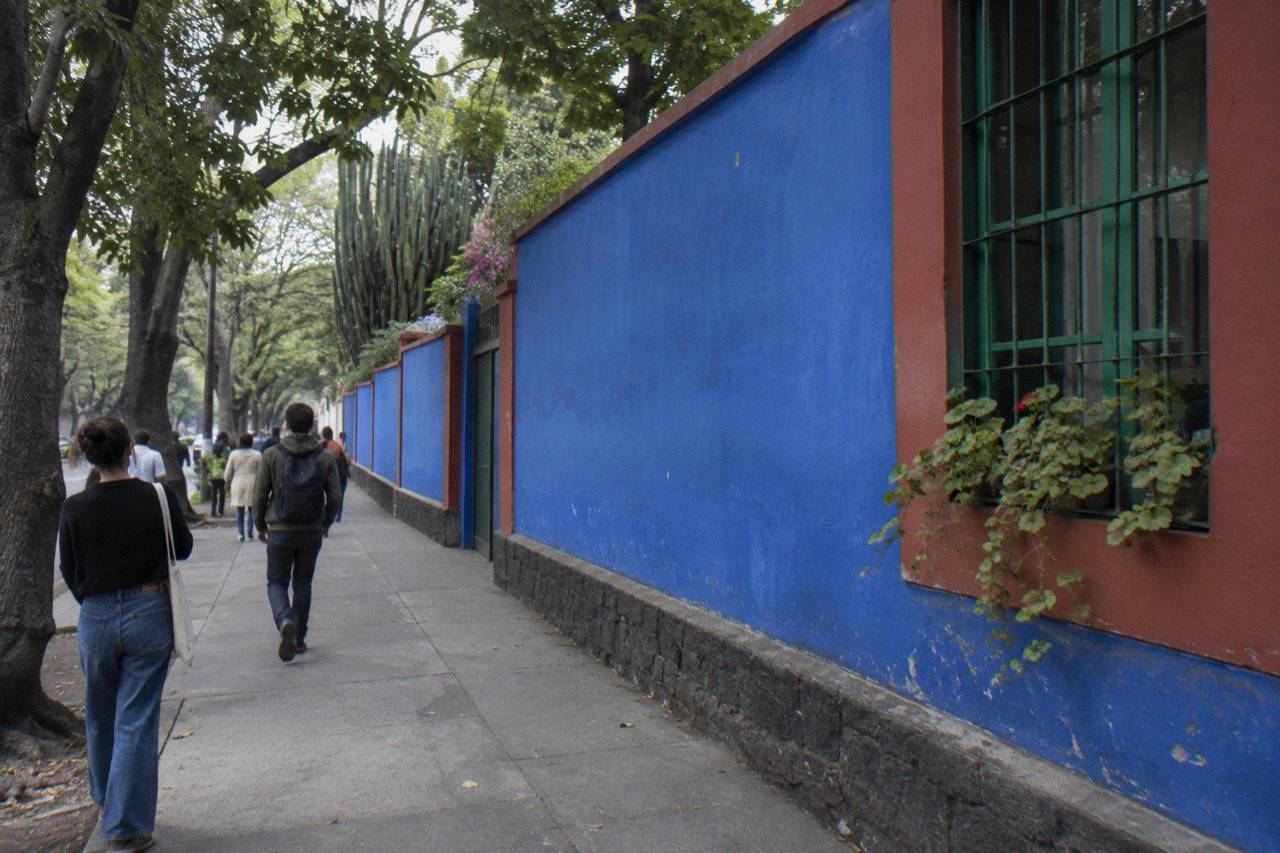
Elsewhere, Coyoacán and San Ángel hold the Frida-themed walks, including the Two-Hour Frida Neighborhood Walk by Estación, 4.84 out of 5 across 1,065 GuruWalk reviews. The Coyoacán walks listed here meet at or finish by the Casa Azul, which is a paid museum, MXN 320, online tickets only, closed Mondays, and never called free on this site. Roma, Condesa and Juárez hold the Trendy Roma and Condesa walk. Chapultepec and Reforma hold the Reforma Essentials Walk and the Chapultepec Castle and Lake walk on freetour.com. The food category and the hidden-neighbourhood category fill out the rest.
Choosing between them is a neighbourhood decision before it is a guide decision, and the free things to do in Mexico City overview groups every option by district. First-visit itineraries usually start with a Centro walk, add a neighbourhood walk on the second day, and use a food walk once they know the city a little. The model is flexible enough that nothing is locked in until you tip.
If the Centro does not fit your plan, three strong alternatives in the same pay-what-you-want model:
Mistakes That Trip People Up At Free Walking Tours
The recurring mistakes are assuming the Sunday INAH free-entry rule covers tourists, booking a Spanish-only walk without reading the language line, expecting museum or castle entry inside the guiding price, and treating Monday as a normal museum day. Each mistake is avoidable with one read of the listing and one look at the closing-day pattern.
The Sunday trap deserves the first place. INAH sites, the Castillo de Chapultepec, the Templo Mayor, the Antropología, Tlatelolco and Teotihuacan, admit Mexicans and foreign residents with ID free on Sundays; tourists pay full price, MXN 210 at the castle, MXN 155 at Tlatelolco. A visitor who books a Sunday Chapultepec-area walk expecting a free castle afterwards has misread the rule, not the walk. The Sunday free-entry question is covered in full on its own page.
The language trap comes second: the Spanish-only listings say so on their own pages, and the booking flow shows the language of each slot. The entry trap is third: no walk on this site includes attraction tickets, and the food walks price their food separately. Monday closes the Jumex, the Franz Mayer, the Tamayo, the MUAC, the Frida Kahlo museum and every INAH museum, so a Monday itinerary built around museums thins out fast. None of these are flaws in the pay-what-you-want model; all of them are reasons to read the listing before reserving.
Common Questions On This Topic
How Do Free Walking Tours Work In Mexico City?
You reserve a place through a platform such as GuruWalk, paying only a small booking fee online, then meet the guide at the published meeting point. The walk runs for the stated duration in the stated language, and at the end you tip the guide whatever you choose. The tip is the guide's entire payment for the guiding.
Do you have to book a free walking tour in advance?
Booking is strongly advised because the busiest walks fill their group caps on peak days. Reserving costs only the platform's booking fee and can be released free of charge if your plans change. Walking up unbooked risks a full group at the meeting point.
How much should you tip the guide?
There is no required amount, and guides state this openly at the end of each walk. The tip is the guide's whole income from the walk, so visitors commonly benchmark it against what a paid tour of similar length would cost in the city. The full reasoning sits on the tipping page of this site.
Are the food and museum tickets included?
No. Guiding is pay what you want; everything consumed or entered is bought separately at face value. Tacos on the food walks, mezcal on the tasting walk, the cable-car fare and any museum entry are all paid directly to the vendor or ticket office.
Do free walking tours run in English?
Many do. Walks on this site state their languages per listing: the busiest Centro walks run in English and Spanish, the historian-led walk adds German, and a small number of listings run in Spanish only. Check the language line before reserving.
Which platforms list these walks?
Most walks here run on GuruWalk. The Chapultepec Castle and Lake walk, the Downtown Secrets Walk and the Santa María la Ribera Alternative are listed on freetour.com. Both platforms use the same pay-what-you-want model, but their rating scales differ: out of 5 on GuruWalk, out of 10 on freetour.com.