Is The Day Of The Dead Parade In Mexico City Free?
Yes, the Day of the Dead parade in Mexico City is free to watch. What is free, what still costs money, when it runs and which free walking tours cover the route.
In Short
Yes. The Day of the Dead parade in Mexico City, the Gran Desfile, is free to watch: no ticket, no barrier fee, no registration. The 2026 edition ran Saturday 31 October at 14:00, from Paseo de la Reforma toward the Zócalo. The monumental ofrenda in the Zócalo and the community ofrendas were also free. What costs money are museums, towers and boat rides, not the parade itself.
The Day of the Dead season turns central Mexico City into an open-air exhibition, and almost all of it is genuinely free to see. This page answers the one question that matters before you plan around it, then breaks the season into its free and paid pieces so nothing catches you out at a ticket window.
Is The Day Of The Dead Parade In Mexico City Free?
Yes, watching the Day of the Dead parade in Mexico City costs nothing. The Gran Desfile is a street parade on public roads, free for anyone standing along the route, and the 2026 edition ran on Saturday 31 October at 14:00, moving from Paseo de la Reforma toward the Zócalo. No ticket exists for the sidewalk. The city's official visitor guide lists the parade alongside the ofrendas and light installations as free public programming.
The parade the world pictures when it thinks of Day of the Dead in the capital is the Gran Desfile, the big daytime procession that travels down Paseo de la Reforma and finishes in the historic centre. The city government publishes the programme each season on its official visitor guide, and the 2026 edition is the reference point for everything written here: the flower festival on Reforma ran 18 October to 1 November, the parade itself went Saturday 31 October at 14:00, and the lighting spectacle in the Zócalo ran 29 October to 4 November.
It helps to understand what the parade actually is, because expectations built on other cities' ticketed events lead people astray. The Desfile is not a stadium show and there is no seated grandstand sold to the public in the programme. It is a procession of giant alebrije figures, catrinas, dancers and marching bands on open avenues. The audience stands behind the barriers the city sets up, and standing there is free in exactly the way watching any street parade is free.
The 2026 season is now over, and nothing has been announced for 2027 yet. The honest way to plan is to treat late October and early November as the window: the flower festival filled the weeks before the parade, the ofrendas stayed up for several days around 1 and 2 November, and the Reforma light installation ran about two weeks total, 23 October to 8 November in 2026. When the city publishes the next edition's dates, they will land in that same stretch of the calendar.
One planning note that saves real disappointment: the events are popular and the core viewing spots fill early, but this page makes no claims about crowd sizes or arrival times, because none of that comes from an official source. What is official is the price. Zero. The free status of the parade is the easy part of Day of the Dead; the parts that quietly cost money are elsewhere in the season, and the next section separates them cleanly.
What Does The Free Part Include?
The free part includes the Gran Desfile parade itself, the Ofrenda Monumental in the Zócalo, the community ofrendas, the Reforma flower festival and the El Camino light installation on Reforma. In 2026 all of these were open to the public at no charge. The community ofrendas stood at sites across the city, including the Plaza de las Tres Culturas, and every one was free to view.
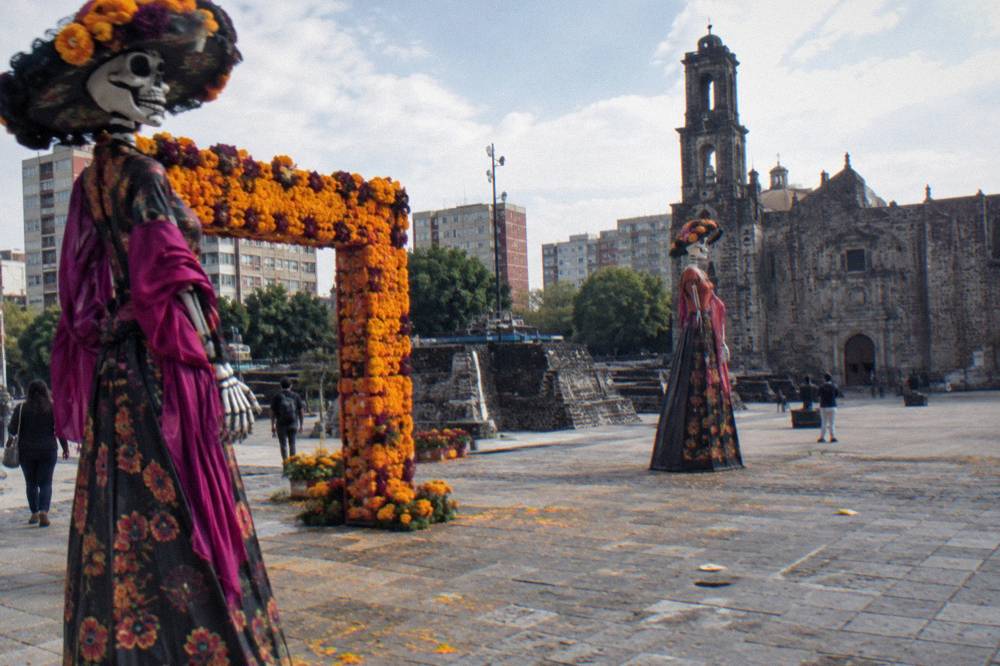
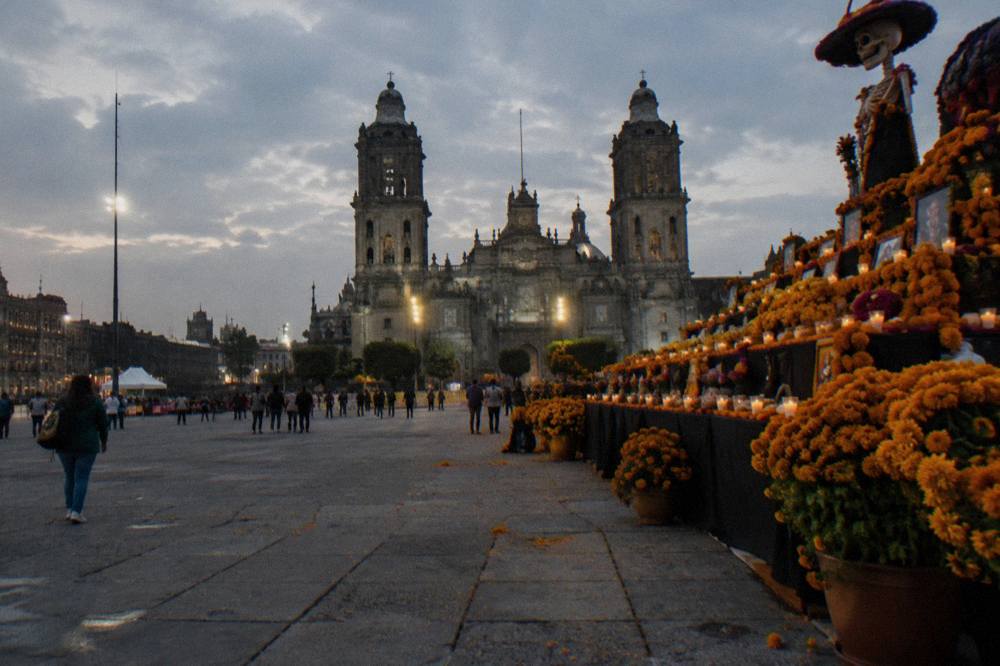
The centrepiece of the free programme is the Ofrenda Monumental in the Zócalo, a giant altar installation built for the season. The 2026 version honoured the Catrina, the iconic skeleton figure created by José Guadalupe Posada, as a 32-metre construction. It stood in the square from 29 October to 2 November and anyone could walk up to it. The Zócalo lighting, a separate illumination display, ran 29 October to 4 November, so the square carried two free spectacles at once.
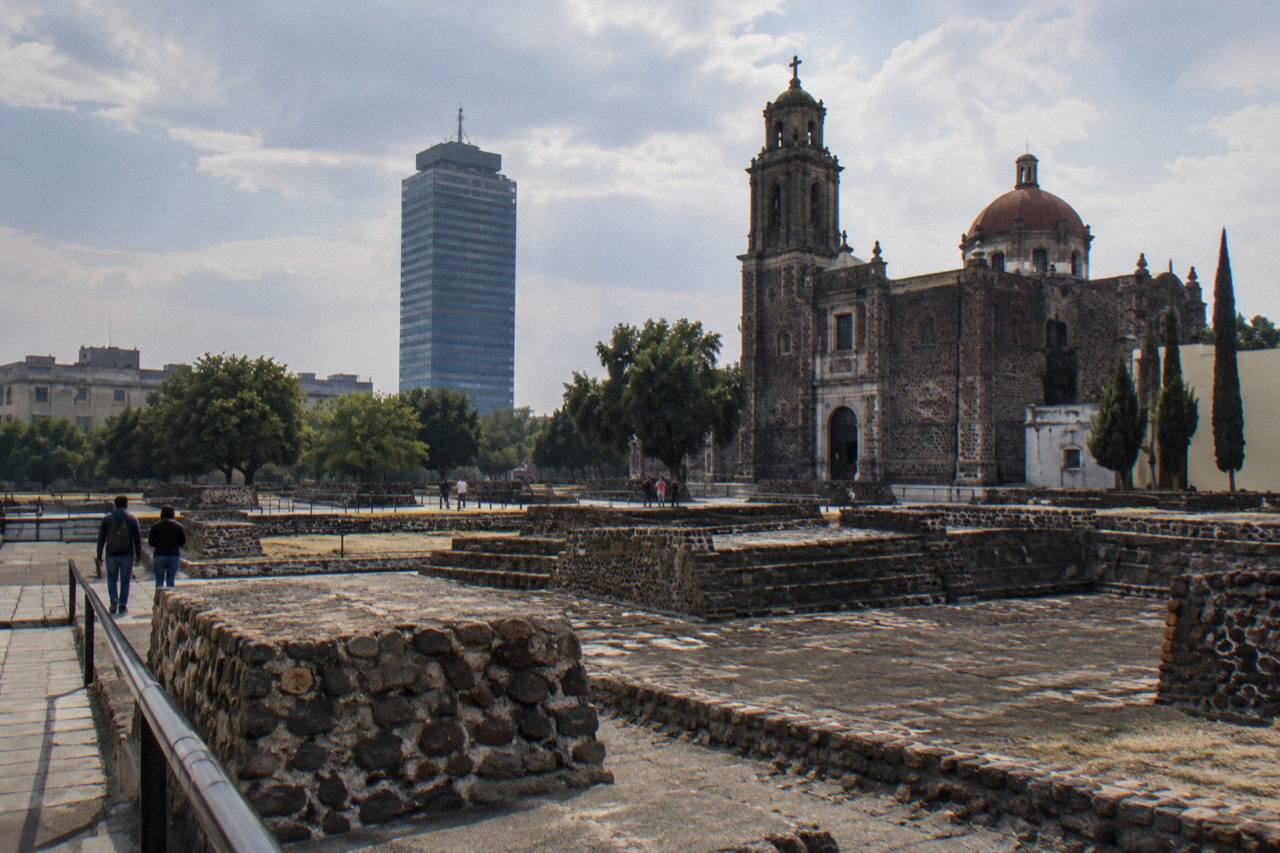
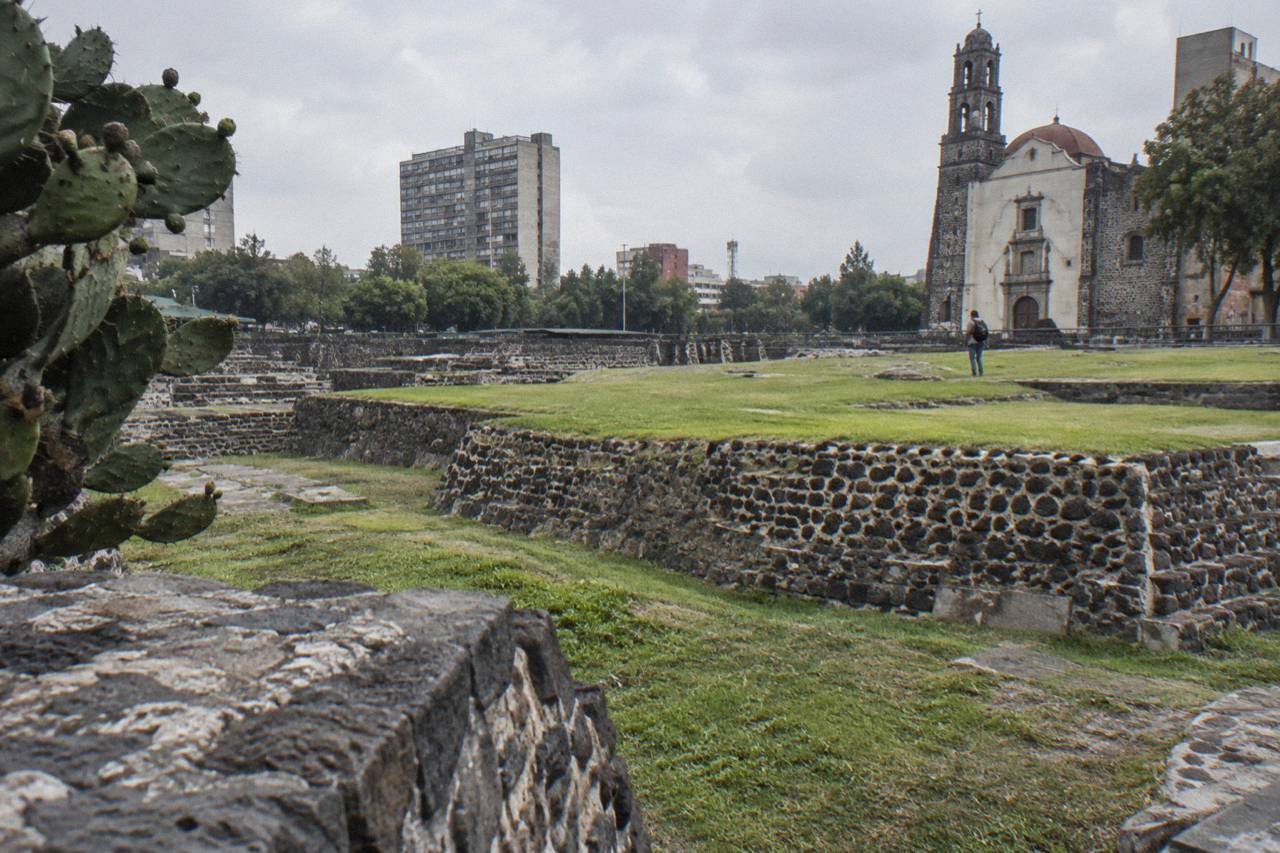
Beyond the square, the community ofrendas spread the season across the city. The official guide listed them at sites including the Plaza de las Tres Culturas in Tlatelolco, where the plaza itself is free public space (the adjacent archaeological zone is a separate, paid visit). Each ofrenda is a neighbourhood or group altar, and viewing them is free. Taken together, the ofrendas make a self-guided route that costs nothing but shoe leather.
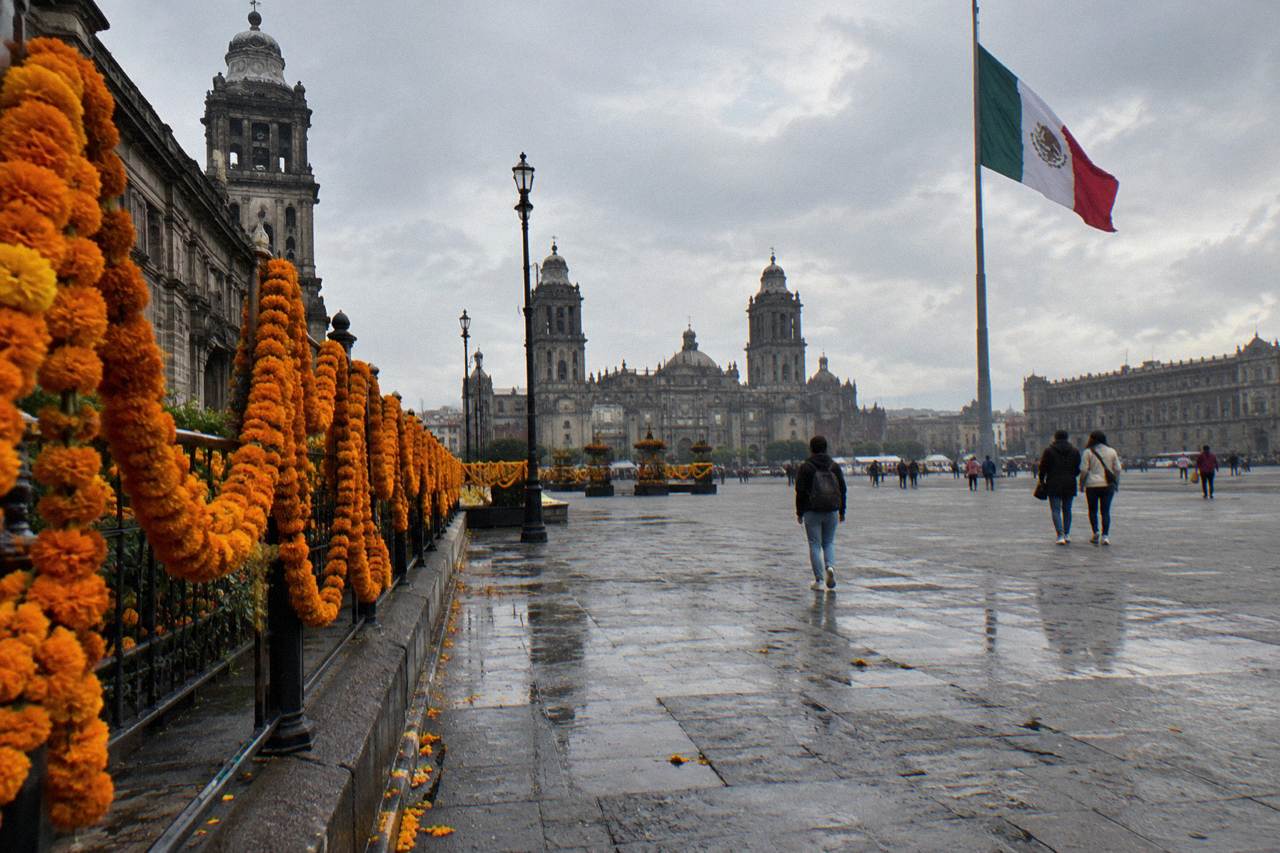
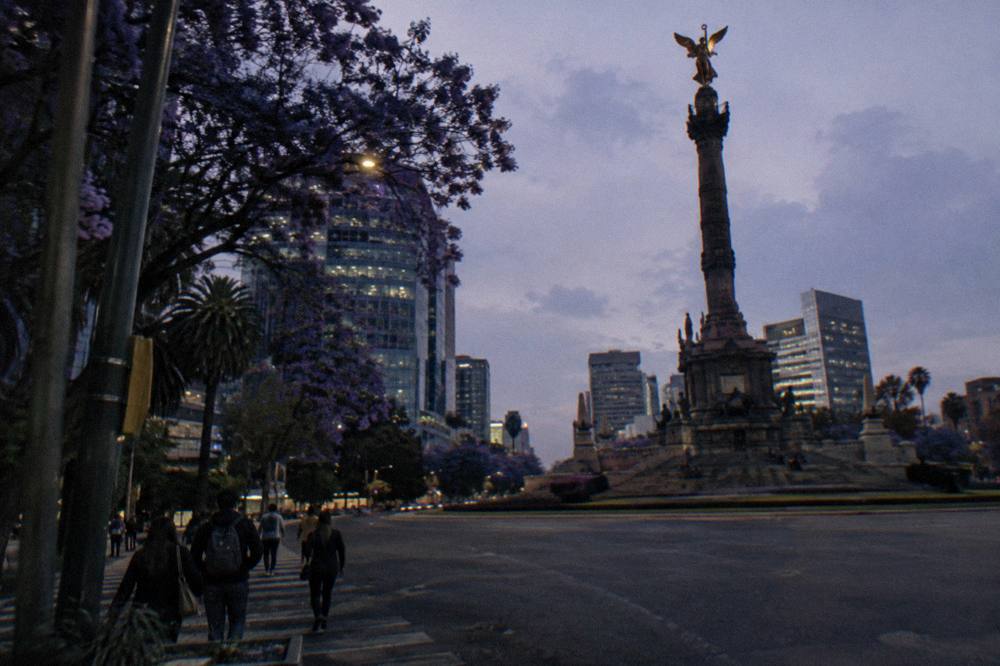
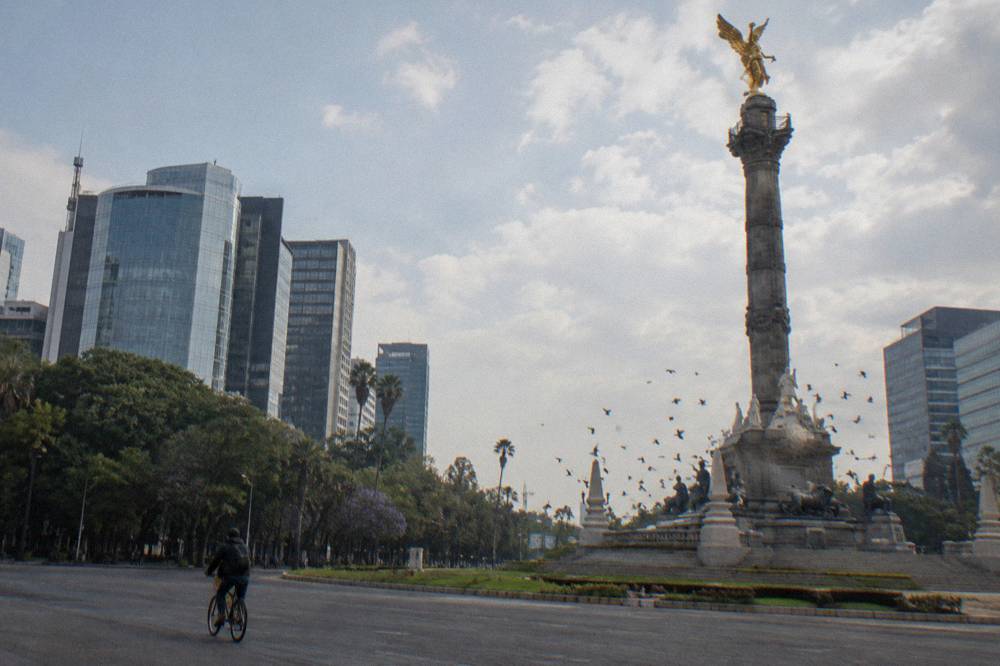
The two Reforma installations round out the free list. The flower festival filled the avenue with marigold displays from 18 October to 1 November, and the El Camino light installation ran from 23 October to 8 November, outlasting the parade weekend itself. Both are viewed from the public street. The Ángel de la Independencia, the avenue's landmark column, is free to see at any time of year, and during the season it sits in the middle of the decorated stretch.
For visitors who want a guide's eye on the historic centre during the season, the site's directory lists 24 free, pay-what-you-want walking tours, and several concentrate on the Centro Histórico where most of the free Day of the Dead programming sits.
These walks are all listed on GuruWalk or freetour.com, run by independent local guides, and cost nothing up front: you tip at the end. They are a way to add depth to streets you would otherwise walk past, parade weekend or any other.
What Do You Still Have To Pay For?
You still pay for museums without a free window that fits your dates, mirador tickets, boat rides and any Noche de Museos evening entry. The Museo Frida Kahlo costs MXN 320 and sells online only; Museo Franz Mayer is MXN 130 and Museo Memoria y Tolerancia MXN 160, with no free day found for any of them. Noche de Museos is not free: it charges standard or reduced evening prices.
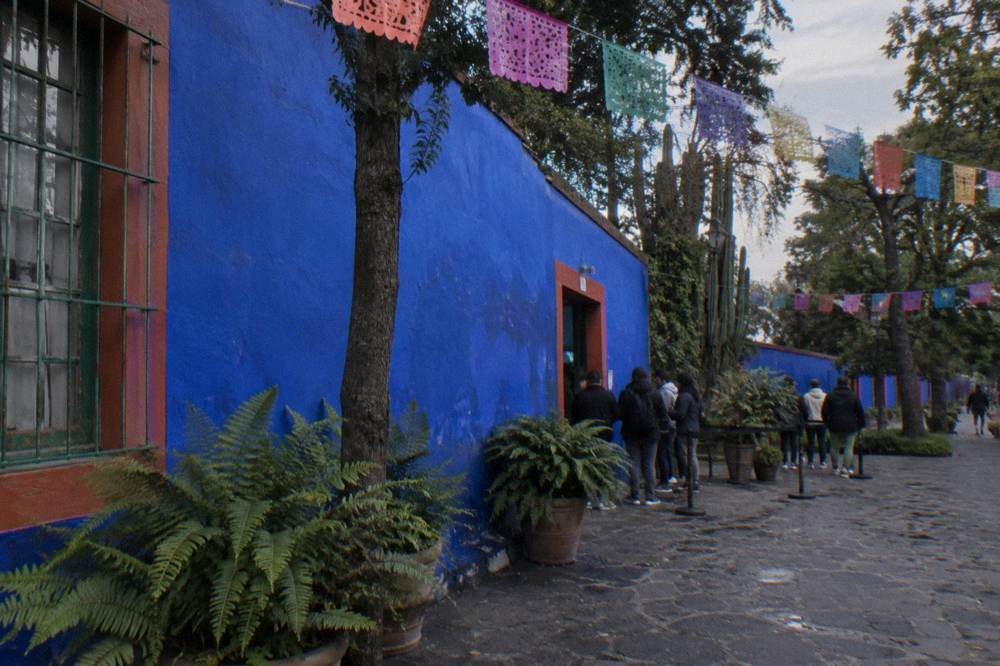
The trap in Day of the Dead week is that people extend "the parade is free" into "everything is free this week," and the museum calendar does not work that way. The private and foundation museums charge every day. The Frida Kahlo museum, the Casa Azul in Coyoacán, is MXN 320, online tickets only with no in-person sales, closed Mondays, and closed 1 January 2027, with 24 and 31 December closing at 14:00. Its ticket includes the Anahuacalli museum. Franz Mayer at MXN 130 and Memoria y Tolerancia at MXN 160 likewise list no free day.
The big public museums split into regimes that are easy to confuse. The INAH sites, the Museo Nacional de Antropología, Museo del Templo Mayor, Castillo de Chapultepec, Tlatelolco and Teotihuacan, offer Sunday free entry only to Mexicans and foreign residents with ID; tourists pay, MXN 210 at most of them and MXN 155 at Tlatelolco. Every sentence that says Sunday free at an INAH site has to carry that restriction, because a tourist arriving on a free-Sunday assumption pays full price at the door.
The INBAL and UNAM museums have their own windows. Palacio de Bellas Artes is MXN 95 with Sunday free for everyone, but the ticket is sold at the box office only, no online booking. The Museo Nacional de Arte (MUNAL) is MXN 95 with Sunday free for Mexican nationals and foreign residents with ID only. The Museo de Arte Moderno is MXN 95 with Sunday free for everyone. The MUAC is free on Thursdays from 18:00 to 20:00 and MXN 60 otherwise; the Museo del Chopo is free on Wednesdays. Genuinely free every open day: the Museo Soumaya at all its sites and the Museo Jumex, both of which pair well with a Reforma visit, though Jumex closes Mondays.
| Item | Free? | What you pay |
|---|---|---|
| Gran Desfile parade | Yes, free to watch | Nothing |
| Zócalo Ofrenda Monumental | Yes | Nothing |
| Community ofrendas, incl. Plaza de las Tres Culturas | Yes | Nothing, plaza only |
| Castillo de Chapultepec | Sunday, Mexicans and residents with ID only | MXN 210, tourists |
| Museo Frida Kahlo | No free day | MXN 320, online only |
| Noche de Museos evenings | No | Standard or reduced price |
Two more paid pieces sit near the season's free spectacles. The Torre Latinoamericana's street level is free while its mirador is a paid ticket, and the Monumento a la Revolución's plaza is free while its mirador is ticketed. Noche de Museos, the last-Wednesday evening museum event, is sometimes assumed free and is not: it runs at standard or reduced prices, MXN 60 at Memoria y Tolerancia. If your Day of the Dead budget is built around the parade, keep these line items separate from it.
When Is The Free Option Available?
The 2026 free programme ran from 18 October to 8 November, with the parade on Saturday 31 October at 14:00. The ofrendas in the Zócalo stood 29 October to 2 November and the Zócalo lighting ran to 4 November. Nothing is announced for 2027; the pattern to plan around is late October and early November, and the official visitor guide carries each edition's dates.
The season is longer than the parade, which is the point worth internalizing. The Reforma flower festival opened the programming on 18 October in 2026, ten days before the parade, and closed on 1 November. The El Camino light installation ran 23 October to 8 November, meaning visitors a full week after the Desfile still caught decorated avenues at night. If parade day itself is packed or your dates miss it, the ofrendas and installations carry the season for days on either side. Other pages covering the same trip are gathered on Free Things To Do In Mexico City.
For the 2027 edition, the honest answer is that the city had announced nothing as of 10 November 2026. The official visitor guide at mexicocity.cdmx.gob.mx is where each edition's programme appears, and checking it close to your travel dates is the reliable move. The shape of the season, flower festival, then parade on the final Saturday of October or the first of November, then ofrendas through 2 November, has been stable enough to plan accommodation and flights around.
Weekday logic also matters for the paid neighbours of the free events. Every INAH museum closes Monday, as do the Museo Jumex, Museo Tamayo, MUAC and the Frida Kahlo museum, so a long weekend built around the parade Saturday often runs into a Monday with several doors shut. The free street programming has no closing day; the museums around it do.
Where Does The Free Visit Start?
The free visit starts on public streets and plazas: Paseo de la Reforma for the parade and flower festival, the Zócalo for the Ofrenda Monumental and lighting, and the Plaza de las Tres Culturas among the community-ofrenda sites. There is no gate, ticket office or meeting point for any of it, because these are open public spaces, not venues.
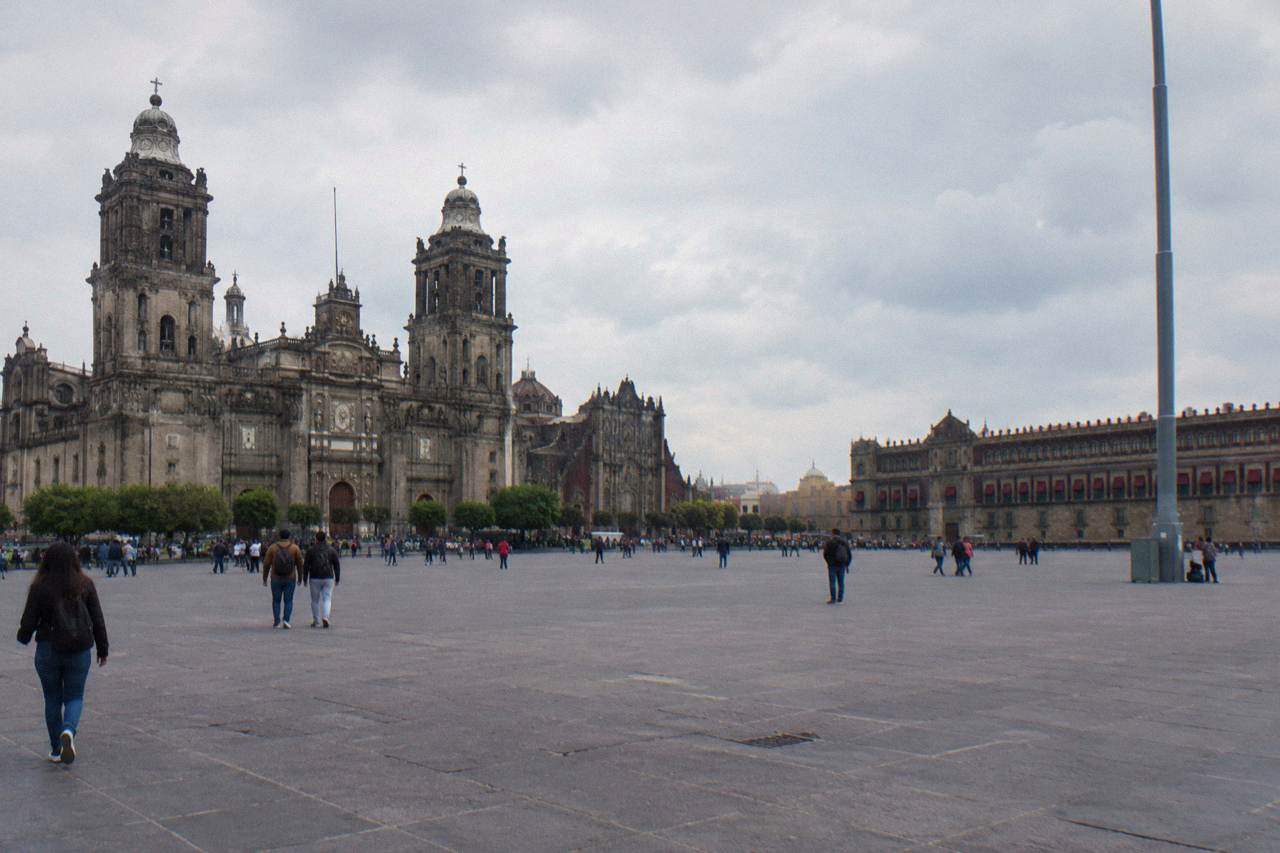
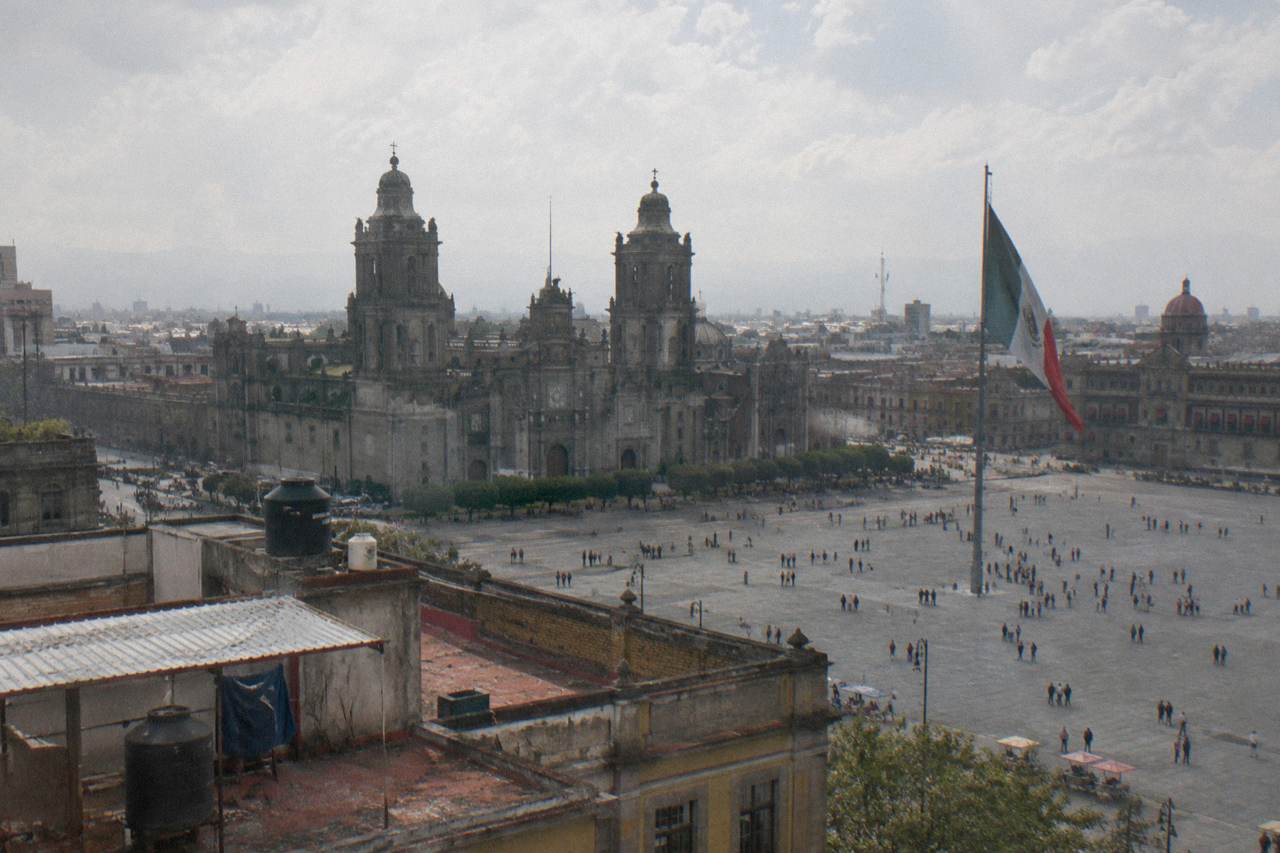
The parade route in 2026 ran from Paseo de la Reforma toward the Zócalo, so any point along that corridor works as a viewing spot, and the same avenue hosted the flower festival and El Camino. The Zócalo, formally the Plaza de la Constitución, held the Ofrenda Monumental and the lighting display; it is the same square that anchors free walking tours of the Centro Histórico year-round, and the parish of public life in the historic centre. The plaza itself is free public space at all times.
The community ofrendas stretched the free visit beyond the centre. The Plaza de las Tres Culturas in Tlatelolco is the named example from the 2026 programme, a free plaza where the ofrenda stood alongside, but separate from, the paid archaeological zone. That split, free plaza beside paid site, repeats across the city: the Chapultepec forest is free to enter while the Castillo de Chapultepec costs MXN 210, and the Xochimilco embarcaderos are free to walk while a trajinera boat ride is paid.
For structure, a free walk can anchor the same ground. The Two-and-a-Half-Hour Introduction, run by the guide Kactus on GuruWalk, rated 4.82 out of 5 across 4,138 GuruWalk reviews, meets at Plaza de la Constitución, Zócalo, and runs 2 hours 30 minutes in English and Spanish. Guiding is pay what you want.
The Estación Historic Center Walk covers the same neighbourhood from a different angle: it meets at the Metropolitan Cathedral, Zócalo, runs 2 hours in English and Spanish, and carries 4.83 out of 5 across 2,838 GuruWalk reviews, also pay what you want on GuruWalk. Either one gives the square and its surroundings a frame you can return to on parade day.
If you would rather read the season as a whole first, the site's Zócalo free things guide lays out the square's year-round free attractions, and how free walking tours work explains the pay-what-you-want mechanic before you stand in one.
Which Free Walking Tours Cover This?
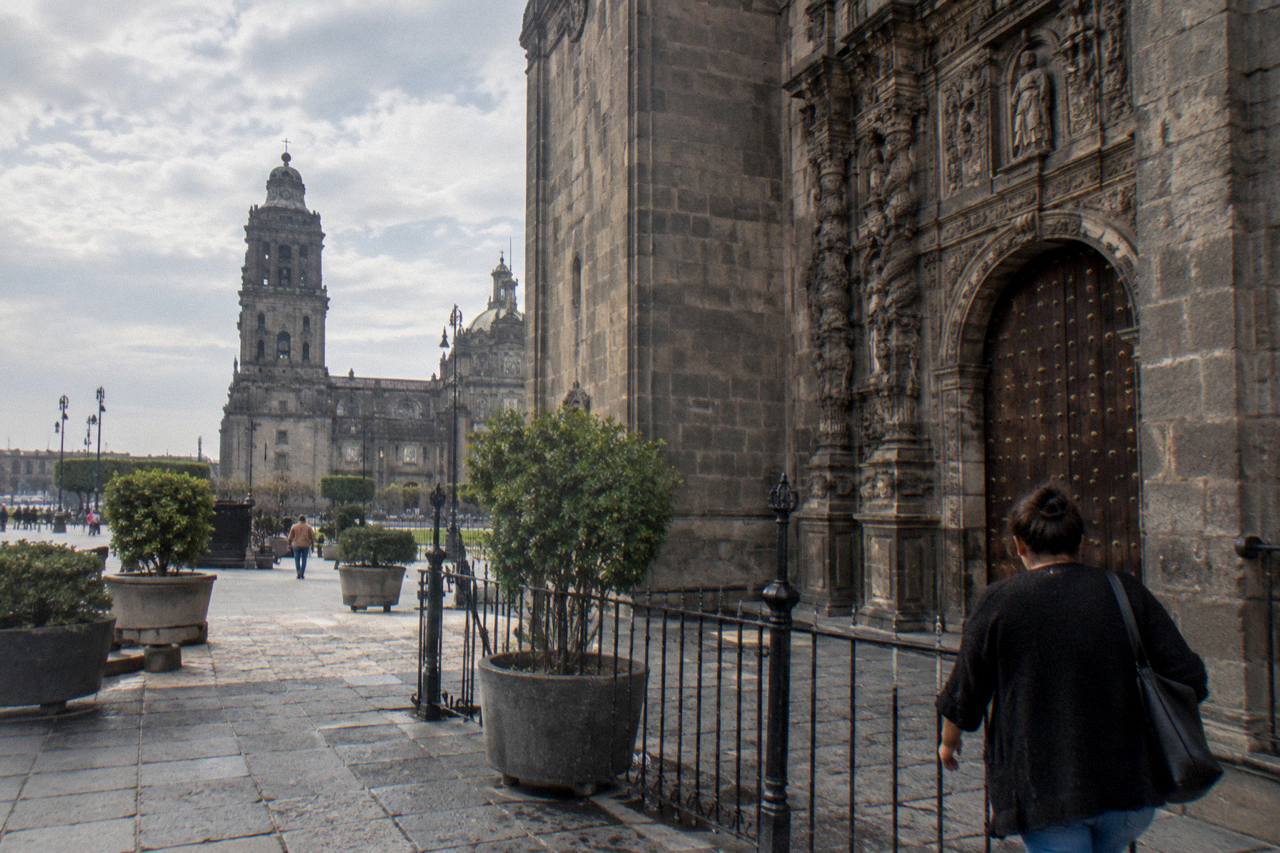
No Day of the Dead-specific free walk is listed in this site's directory, but the free walking tours of the Centro Histórico cover the ground the parade and ofrendas occupy: the Zócalo, the cathedral frontage, Avenida Madero and the surrounding streets. These walks run year-round on GuruWalk and freetour.com, meeting at points such as Plaza de la Constitución and the Metropolitan Cathedral.
The directory ships 24 free, pay-what-you-want walks in total, and the Centro Histórico group is where the Day of the Dead action concentrates. The Historic Center With a Historian walk, run by Free Tour Europe on GuruWalk, meets at Plaza de la Constitución, Zócalo, runs 2 hours 15 minutes in German, English and Spanish, and holds 4.91 out of 5 across 1,360 GuruWalk reviews. The History, Art and Cuisine Walk by Andares Free Walking Tour meets at República de Guatemala 4, runs 2 hours in English, and stands at 4.86 out of 5 across 520 GuruWalk reviews.
Two further options are simple listings on this page rather than standout picks: the Downtown Secrets Walk, listed on freetour.com, 9.8 out of 10 across 205 freetour.com reviews, meeting at Teatro Hidalgo on Avenida Hidalgo 23, and the English Legends and Myths Tour on GuruWalk, which meets at Eje Central and Avenida Madero. This site names each walk only by its platform, guide, meeting point and neighbourhood, because routes vary with the guide and the day.
To be clear about what a walk can and cannot do here. A free walking tour gives you the historic centre as it exists every week: the square, the streets, the architecture, the layers of history a guide narrates. It does not include the parade, which is a city event, not a tour product, and none of the walks listed here advertise Day of the Dead programming. The combination that works is a walk to learn the ground, then the free city spectacles on top of it. The season's headline pieces, after all, need no guide at all.
For anyone weighing the season against other free weekends in the capital, the comparison piece on Sunday free days at museums is the companion read, and the Frida Kahlo museum's own page is the place to buy that MXN 320 online-only ticket if Coyoacán is on your list.
Mistakes That Trip People Up At The Day Of The Dead Parade
The recurring mistakes are assuming the parade needs a ticket, assuming Sunday museum free days apply to tourists, and assuming Noche de Museos is free. The Gran Desfile is a free street parade; INAH Sunday free entry covers Mexicans and foreign residents with ID only; and Noche de Museos charges evening prices. Each mistake costs money or a wasted morning.
The first mistake is hunting for parade tickets. Resellers surface around big events, and the city's own programme makes no charge for the Desfile, the ofrendas or the street installations. The second is the Sunday trap in reverse: visitors who hear "museums are free on Sunday" show up at the Templo Mayor or the Castillo de Chapultepec and pay MXN 210, because that scheme is for Mexicans and foreign residents with ID. The reverse trap also exists, at Bellas Artes and the Museo de Arte Moderno, where Sunday genuinely is free for everyone.
The third is treating Noche de Museos as a free evening. It is a discounted-hours event, not a free one, with evening pricing that was MXN 60 at Memoria y Tolerancia. The fourth is the Frida Kahlo museum: no in-person tickets exist at all, online only at MXN 320, so a walk-up visit during a busy season ends at a closed counter. The fifth is Monday: the season often spans a weekend-plus-Monday stay, and the INAH museums, Jumex, Tamayo, MUAC and Frida Kahlo all close that day, leaving the free street programming as the day's only guarantee.
The last mistake is assuming the 2026 dates repeat exactly. The edition described here is past, and 2027 had announced nothing on the official guide at last check. Plan the window, late October into early November, and confirm the specific Saturday and ofrenda dates on the city's official pages before locking anything that depends on them.
Common Questions On This Topic
Is The Day Of The Dead Parade In Mexico City Free?
Yes. The Gran Desfile is a street parade on public roads with no ticket, barrier fee or registration. The 2026 edition ran Saturday 31 October at 14:00 from Paseo de la Reforma toward the Zócalo, and the city lists it as free public programming.
Where is the best free place to watch the parade?
Anywhere along the public route works, which ran from Paseo de la Reforma toward the Zócalo in 2026. The Zócalo itself also hosted the free Ofrenda Monumental from 29 October to 2 November, so the square combines parade finish and altar viewing.
Are the ofrendas free to visit?
Yes. The Ofrenda Monumental in the Zócalo, the community ofrendas at sites including the Plaza de las Tres Culturas, and the Reforma flower festival and El Camino light installation were all free public programming in the 2026 edition.
Is the Day of the Dead parade held every year?
The 2026 edition ran, but nothing had been announced for 2027 as of the official guide's latest posting. The pattern to plan around is late October and early November, with the parade on the final Saturday of October in the 2026 edition.
Do I need to pay for a walking tour during Day of the Dead?
No. The site's directory lists free, pay-what-you-want walks on GuruWalk and freetour.com that cover the Centro Histórico ground the parade occupies, such as the Two-and-a-Half-Hour Introduction, 4.82 out of 5 across 4,138 GuruWalk reviews, meeting at Plaza de la Constitución, Zócalo.
Are museums free during Day of the Dead week?
Not automatically. INAH sites are Sunday-free for Mexicans and foreign residents with ID only, tourists pay MXN 210. Bellas Artes and the Museo de Arte Moderno are Sunday-free for everyone; Soumaya and Jumex are free every open day; Frida Kahlo is MXN 320 with no free day.